
Saturation Diving: The Deepest Frontier
Hans-Henrik EnoksenShort summary of story:
Saturation diving is one of the world’s most extreme and demanding professions. Divers live for weeks in pressurized chambers, working at depths where survival depends on absolute precision. This blog explores the dangers, discipline, and resilience required to operate in the crushing depths of the ocean - and the vital role of a reliable timepiece in this unforgiving environment. Join us as we dive into the world of saturation diving and discover why the Enoksen Deep Dive watch is built to thrive where few dare to go.

Saturation Diving: The Deepest Frontier
Beneath the rolling waves, far beyond the reach of sunlight, lies a world that only a select few will ever experience. It is a realm of absolute darkness, crushing pressure, and unimaginable isolation - where only the most highly trained and resilient individuals dare to go. This is the domain of the saturation diver, an elite professional who lives and works in the depths of the ocean for weeks at a time, performing some of the most demanding and dangerous tasks on Earth.
What is Saturation Diving?
Saturation diving is the ultimate test of human endurance and engineering precision. Unlike conventional diving, where ascent times are limited by the risk of decompression sickness, saturation diving allows divers to stay at extreme depths for extended periods - sometimes weeks at a time. By living in a pressurised habitat and breathing a carefully controlled mix of helium and oxygen, they remain "saturated" with inert gases, eliminating the need for multiple ascents and descents. When their mission is complete, they undergo a single, carefully monitored decompression that can take days before they return to the surface.

One of the World’s Most Dangerous Professions
Saturation divers operate at depths of up to 300 meters (1,000 feet), where the pressure is so intense that a single equipment failure can mean instant death. The challenges they face are extreme: pitch-black working conditions, freezing temperatures, and the ever-present danger of high-pressure nervous syndrome (HPNS), a neurological condition caused by deep helium exposure. Every movement is deliberate, every action critical - because in this world, there is no margin for error.
And yet, it is not just the depths that make this profession perilous. The psychological strain of spending weeks in a tiny pressurised chamber - cut off from fresh air, natural light, and even the simple freedom to step outside - demands an unshakable mental fortitude. Only those with the strongest minds and bodies can endure the isolation and pressure, both physical and psychological, that come with the job.
Life as a Saturation Diver
A saturation diver’s day begins with a transfer from their hyperbaric living quarters to the deep via a diving bell - a steel capsule barely large enough to hold its crew. Once at depth, they step out into the abyss, where they perform complex underwater construction, pipeline repairs, or even delicate salvage operations. Their tools are specialised, their suits reinforced, and their every breath is monitored by a team on the surface.

Back in the chamber, life follows a strict routine. Meals are prepared in advance, entertainment is limited, and every conversation echoes against the steel walls of their temporary home. Yet, there is a camaraderie among these men - an unspoken bond forged in the knowledge that they are among the few who have seen the world from this perspective, where no sunlight reaches and only raw skill and discipline keep them alive.
A Watch for the Extreme
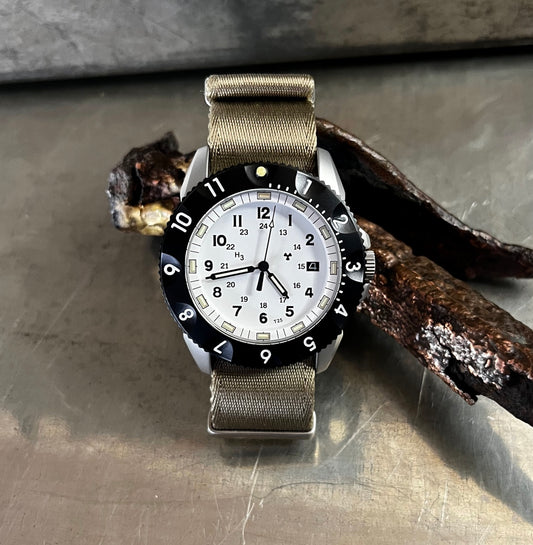
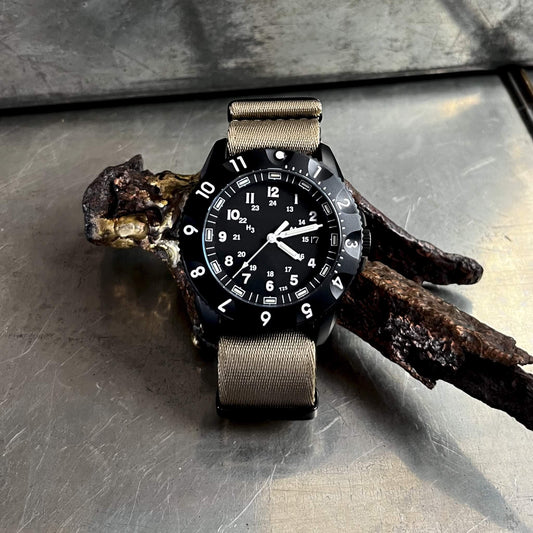
Since the launch in 2018, the Deep Dive 1,000m diver’s watch from Enoksen has become a trusted friend of many saturation divers around the world. The powerful specifications and the no-nonsense design of the Deep Dive makes it an ideal companion into the unknown. 
A Calling Like No Other
Saturation diving is not just a job; it is a calling. It is for those who crave the extreme, who seek to master the unknown, who are willing to push their bodies and minds to the limit in pursuit of something greater than themselves. It is a profession of unmatched skill, courage, and resilience.
In the deep, where machines falter and the ocean reigns supreme, it is the saturation diver who steps in - armed with nothing but knowledge, experience, and an indomitable will.
Step Into the Story - Experience the Deep Dive Collection here